
On June 1, 2025, Ukraine launched a groundbreaking drone offensive, dubbed “Operation Spider Web,” striking deep into Russian territory and marking a significant shift in modern warfare tactics.
Unprecedented Covert Operation
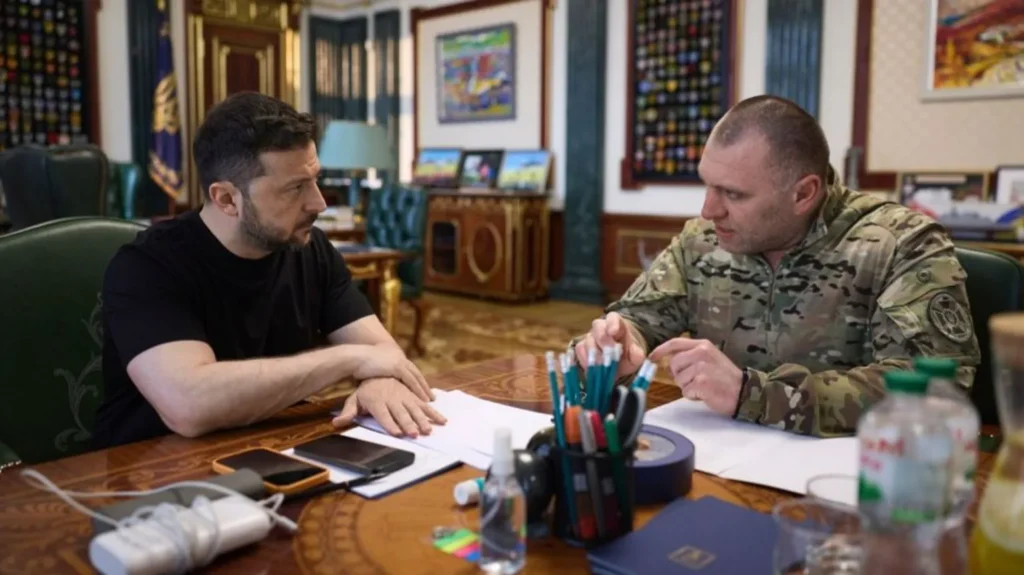
Over 18 months, Ukraine’s Security Service (SBU) meticulously planned this operation, personally overseen by President Volodymyr Zelensky. The strategy involved smuggling 117 AI-powered drones into Russia, concealed within wooden containers mounted on trucks. Unwitting Russian drivers transported these containers to proximity of five key airbases: Olenya, Dyagilevo, Ivanovo Severny, Belaya, and Ukrainka .
Precision Strikes on High-Value Targets
At the designated time, the containers’ roofs were remotely activated, releasing the drones to execute precision strikes. The targets included Russia’s strategic bombers—Tu-95, Tu-22M3, and the A-50 early-warning aircraft. Ukrainian officials report the destruction or disabling of 41 aircraft, accounting for approximately 34% of Russia’s long-range bomber fleet, with estimated damages around $7 billion .
Strategic and Global Implications
This operation not only inflicted substantial material losses but also demonstrated the efficacy of AI-guided drones in modern combat. The success of Operation Spider Web has prompted global military analysts to reassess airbase vulnerabilities and the evolving nature of drone warfare .
Russia’s Response and International Repercussions
In retaliation, Russia labeled the attacks as terrorism and intensified its own drone and missile strikes on Ukraine, resulting in civilian casualties. The incident has further strained diplomatic relations, with peace talks in Istanbul facing heightened tensions .
Operation Spider Web stands as a testament to Ukraine’s innovative military strategies and underscores a pivotal moment in the utilization of autonomous systems in warfare.