Kyiv Under Siege: Russian Drone Swarm Targets Capital from All Sides
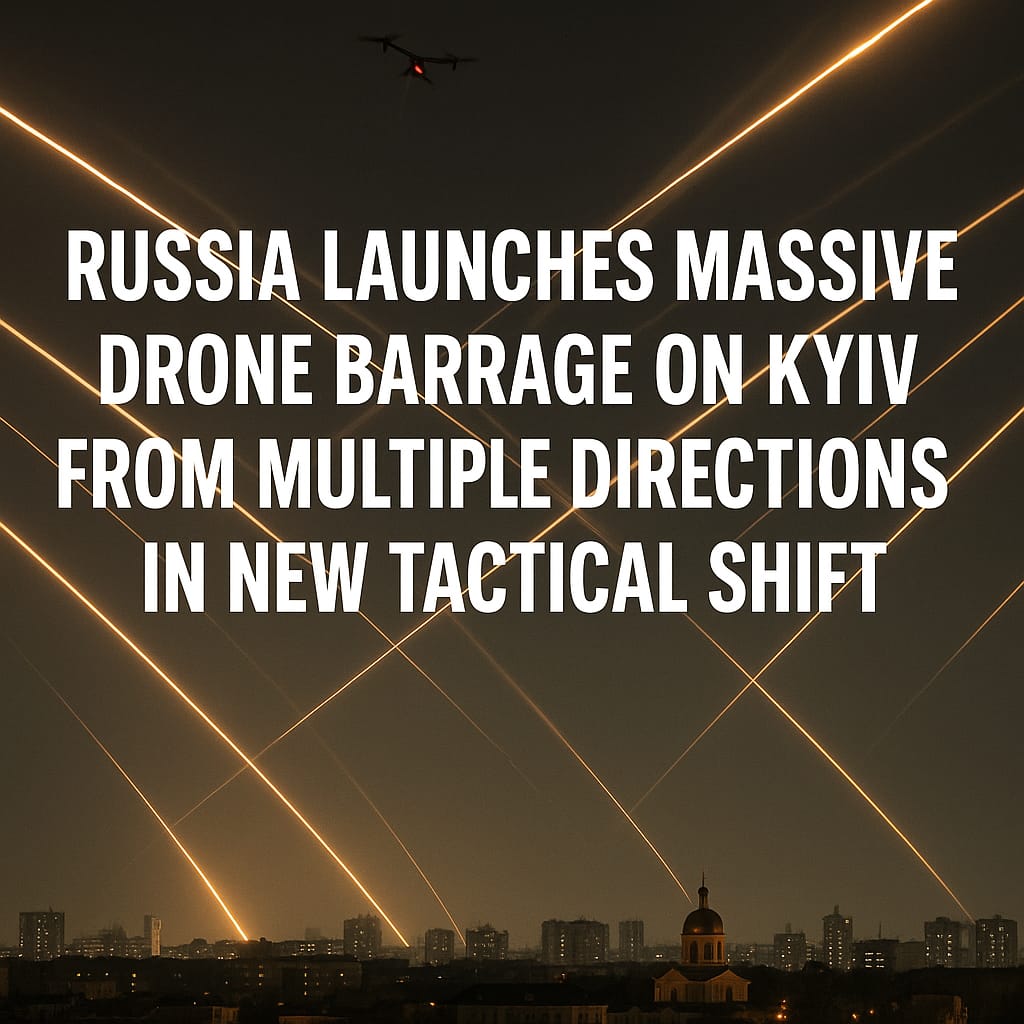
Kyiv, Ukraine – In a notable shift in battlefield tactics, Russian forces launched a massive overnight drone attack on Ukraine’s capital, Kyiv, targeting the city from multiple directions in what officials are calling one of the most complex aerial assaults in recent months.
According to the Ukrainian Air Force, the Russian military deployed a swarm of Iranian-made Shahed drones, flying in from various vectors in a calculated move designed to overwhelm the city’s air defense systems. Ukrainian defense officials confirmed that more than 40 drones were launched in the early hours, with the majority intercepted before reaching their intended targets.
A Tactical Shift in Russia’s War Strategy
This latest attack represents a significant change in Russia’s military approach. Previously, drone and missile strikes often came from specific, predictable directions—typically from the south or east. However, the drones involved in this recent assault reportedly entered Kyiv’s airspace from the north, east, and southeast, suggesting a deliberate strategy to scatter Ukrainian response forces and exploit weak points in its defense grid.
“This tactic aims to confuse and exhaust our anti-aircraft units,” said Serhiy Popko, the head of Kyiv’s military administration. “But our defense teams were prepared and successfully neutralized most of the threats.”
Military analysts believe this change in tactics could signal Russia’s intent to test Ukraine’s defenses ahead of larger coordinated operations, especially as international military aid continues to arrive in Ukraine.
Impact on Kyiv and Civilian Areas
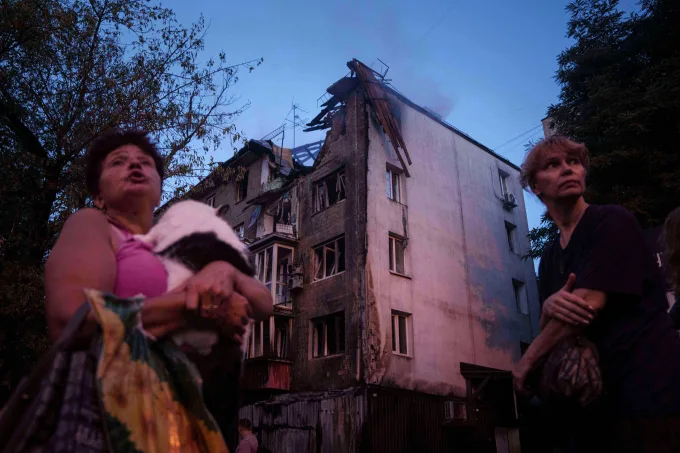
Though most drones were shot down, falling debris caused fires and property damage in several neighborhoods. Kyiv’s mayor, Vitali Klitschko, confirmed that at least four residential buildings sustained minor to moderate damage, and two civilians were treated for smoke inhalation. There were no reported fatalities.
Emergency crews worked through the night to extinguish fires and clear debris from roads and rooftops. Air raid sirens blared across the capital for more than three hours, keeping residents awake and in shelters.
“The psychological toll is enormous,” said Daryna, a local resident in Kyiv’s Podil district. “Even if they don’t hit their targets, the fear never goes away.”
Ukraine’s Air Defense: Holding Strong but Strained
Ukraine’s air defense system, bolstered by Western support, continues to intercept a large number of incoming drones and missiles. However, military experts warn that constant attacks from unpredictable directions could place increasing pressure on operators and equipment.
President Volodymyr Zelenskyy praised the air defense crews for their performance, stating, “Our sky guardians once again proved their effectiveness, saving countless lives in the process.”
Zelenskyy also called on international allies to accelerate the delivery of air defense systems and ammunition, warning that Russia’s evolving drone warfare could pose new challenges.
Global Response and Future Outlook
The international community has condemned the latest Russian assault. U.S. Secretary of State Antony Blinken emphasized the importance of continued support for Ukraine, stating, “This aggression further proves the need for ongoing military and humanitarian aid to help Ukraine defend its people and sovereignty.”
As Ukraine braces for more such attacks, military observers say the Kremlin may be trying to wear down Ukrainian morale and resources through sustained drone warfare.
This apparent tactical evolution—from linear, predictable attacks to chaotic, multi-directional assaults—suggests that drone warfare will continue to play a central role in Russia’s ongoing military campaign in Ukraine.